About Life With Bipolar Type Two
The book, Life With Bipolar Type Two: a guide to stability, is a true labour of love. Written over the course of two years by Eleanor Worsley, this expectation-bending book is based on her lived experience, anecdotal evidence from others with BPII, and incorporates significant historical, neuro-scientific, genetic, physiological, holistic, psychological, sociological, and medical research. Life With Bipolar Type Two is a unique type of mental health resource created by an educator who has BPII, specifically written to help other people who have BPII, their loved ones and medical professionals. Eleanor has integrated and coalesced medical information with clear explanations, personal insight and stories, extensive research across a range of relevant fields, and feedback from others in the bipolar community in a refreshing manner which is accessible and informative while being personal and sincere.
Life With Bipolar Type Two explores a wide range of topics and themes relevant to those diagnosed and/or living with BPII. Subjects include: medications; psychological interventions; alternative therapies; complimentary medicine; life style choices; good and bad habits; self-harm and harmless self-harm techniques; suicidality; anxiety and coping mechanisms; co-occurring diagnoses; sleep problems and potential solutions; the impact of stress and ways to overcome it; support networks; hypomanic impulsivity; destructive behaviours; forms of depression; mixed episodes; rapid cycling; hypersexuality; pharmaceutical side effects; mood tracking; circadian rhythms and building structure; how to handle disclosures to loved ones and employers; and so much more. Eleanor has explored methods for managing your own BPII alongside advice for loved ones and carers, expectations you should have of medical professionals, and guidance for mitigating/reducing the occurrence of the more problematic symptoms of BPII. You will find that rather than simply describing affective episodes and/or bipolar symptomology, Eleanor provides concrete applicable guidance and advice for reducing, offsetting, mitigating, postponing, and even overcoming various aspects of living with BPII.
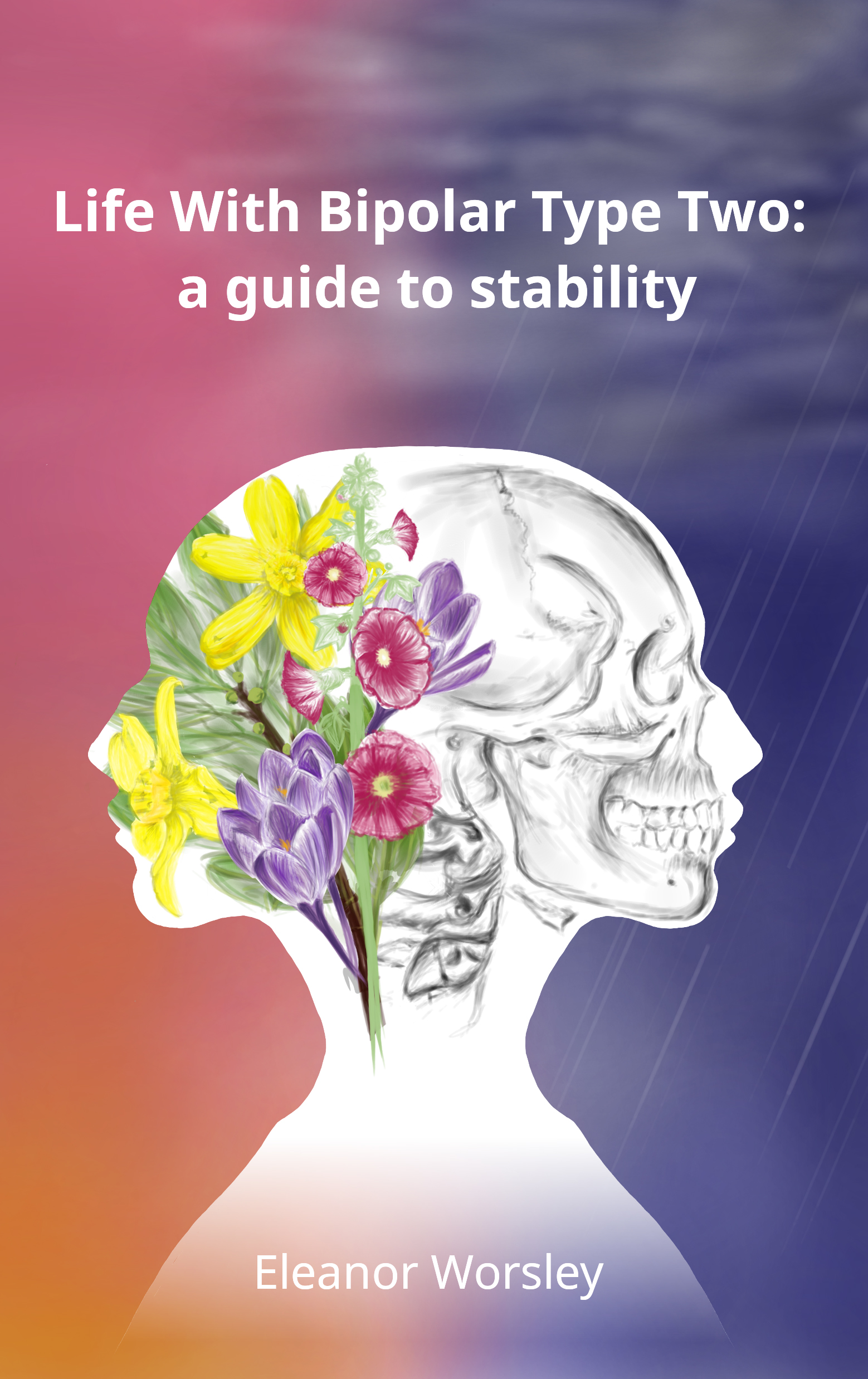
Writing Life With Bipolar Type Two
The creation of Life With Bipolar Type Two stemmed from Eleanor’s explorations of bipolar, and self-reflection as she tried to learn more about her BPII diagnosis, how bipolar might have affected her past, and how it may impact her future. Eleanor researched online and bought books, absorbing all she could about symptoms and presentation, co-occurring disorders, possible causes, treatments, coping mechanisms, management strategies, misconceptions and myths; if the title included any variation of “BPII” and she could access the resource, Eleanor was reading it. She found resources which were incredibly helpful and others which she was appalled to have spent money on. In the course of her research, Eleanor came across books which were mis-advertised/inaccurately described, including some that were worse than useless; to the point where they were actually damaging, spreading mis-information and stigmatised opinions, and she also chanced upon random internet articles which were full of useful information.
When Eleanor began writing she focused on her own BPII. She wrote about her journey, her original diagnosis of Major Depressive Disorder, reflecting on when her earliest bipolar symptoms emerged, evaluating the role bipolar had played in her life so far, assessing how well (or not) she had managed different aspects of living with the disorder. She was initially just following a suggestion from her psychotherapist that (since she was a keen self-motivated learner who enjoyed writing) perhaps a sensible way to explore her own individual bipolar was to write about her experiences. But quickly Eleanor realised that at least some of what she was writing she could find little or no useful information about, she started to expand her subject matter to look more broadly at the disorder rather than focusing on her own experiences. This led to more research and more writing, two years of deep-diving down the “rabbit-hole” of bipolar research.
Eleanor filled notebooks with bullet points, lists, drafts, research notes, content ideas, and more. Then she started writing in earnest. Some sections were written in a hypomanic flurry of activity, which later were edited almost beyond recognition due to their frenetic and inconsistent style; other sections were drudged through in numb phases of depression where researching and writing were the only things she could find any energy or enthusiasm for. In euthymic phases more writing was done and everything written when not/less stable was smoothed out (overall), but she chose to retain some sections which she might rather have not included because they are so indicative of life with BPII (for example, she is still a little embarrassed that she told the whole world about the time she nearly punched her mum in the face).
One of the issues Eleanor had encountered when reading self-help books (including long before she started this project) was that they were sometimes written in sections which were far too long to focus on if she was depressed or hypomanic (sometimes there were sections which felt too long when she was euthymic!), which, from talking to others, she learnt was a common complaint. The main issue she found with the medical literature was that the jargon and scientific terminology was rarely defined or explained, so she was looking up words constantly. With the autobiographies and anecdotal stories, while they were interesting and sometimes helpful, there was rarely any way to refer back without putting in your own post-it notes/tabs, and very few had citations for any claims or assertions they made about bipolar more generally. So, Eleanor decided that she would try to counter these issues in Life With Bipolar Type Two: a guide to stability.
Eleanor ensured the topic sections were short and clearly subtitled for easy reference. She made certain to cite her claims and reference anything she wrote about BPII or bipolar in general terms. She retained and used the “proper” terminology that mental professionals and researchers use, but made certain to explain them comprehensively. She included details about her own life and the “My Musings” chapter is precisely that, but Eleanor made no presumption that her experiences are universal, though many are indicative. By including personal experience, up-to-date scientific research, medical and clinical data, historical references, and the voices of others who have written about or live with bipolar, Eleanor crafted a book like none she had seen in all her reading: a book focused on Bipolar Type Two, incorporating educational information, medical practice guidelines, personal experience, and practical, practicable advice for daily life with BPII.
Researching Life With Bipolar Type Two
Life With Bipolar Type Two covers a huge scope of information relevant to those living with BPII (as described above). The subjects relevant to people with BPII are varied and cross through many fields of research and daily living. To write a truly comprehensive book which would actually help people with BPII and their support networks, Eleanor read memoirs and autobiographies; trawled online forums and eCommunities; dredged her way through appalling “self-help” guides (some of which may do more harm than good if read in isolation); wandered the websites of bipolar charities and organisations; delved into medical journals and scientific studies; scoured through psychiatric textbooks; picked apart bipolar “survival guides”; explored education materials; spoke with friends and family; discussed with other BPII folks; and did an overall deep-dive into a range of information sources from the strictly anecdotal to the rigorously scientific. Some of what Eleanor made notes on was esoteric, specific, and borderline inaccessible to anyone without a medical degree; some of the literature left her with one note, “Useless: do not recommend”; most of the written sources fell somewhere in-between, and almost all of those made their way to the reference list of Life With Bipolar Type Two: a guide to stability.
Reviews of Life With Bipolar Type Two
Life With Bipolar Type Two: a guide to stability by Eleanor Worsley has been positively received with excellent reviews and high star ratings from readers across the globe.
Eleanor reads all her reviews and is constantly overjoyed by the positive reception and especially the many heartwarming and sincere messages included in many of the reviews.
To buy the book and to see ratings and reviews on Amazon, click HERE.
Please go to the Facebook page to rate, review, or recommend.